

See how much of your call volume is human, which agent-caller pairings win, and where caller-profile mismatches cluster, all from calls you've already taken.
Every Monday, a pro football coaching staff sits down and watches last week's game. Not the highlight reel, the whole thing, play by play. They're looking for the matchup that kept getting beat, the formation the other side kept exploiting, and the backup who quietly had a great afternoon.
Contact centers record every call, sometimes hundreds of thousands a week. Then most of those recordings sit in storage until someone needs one for a QA sample, a dispute or a compliance request. The game tape exists. Almost nobody watches it.
That's a missed opportunity, because those recordings can answer three questions most operations leaders can't answer today:
- How much of my call volume is people versus bots or voice AI agents?
- Which agents and callers bring out the best in each other?
- Where is fraud getting in?
VoxEQ Insights is how you watch the tape.
What VoxEQ Insights actually is
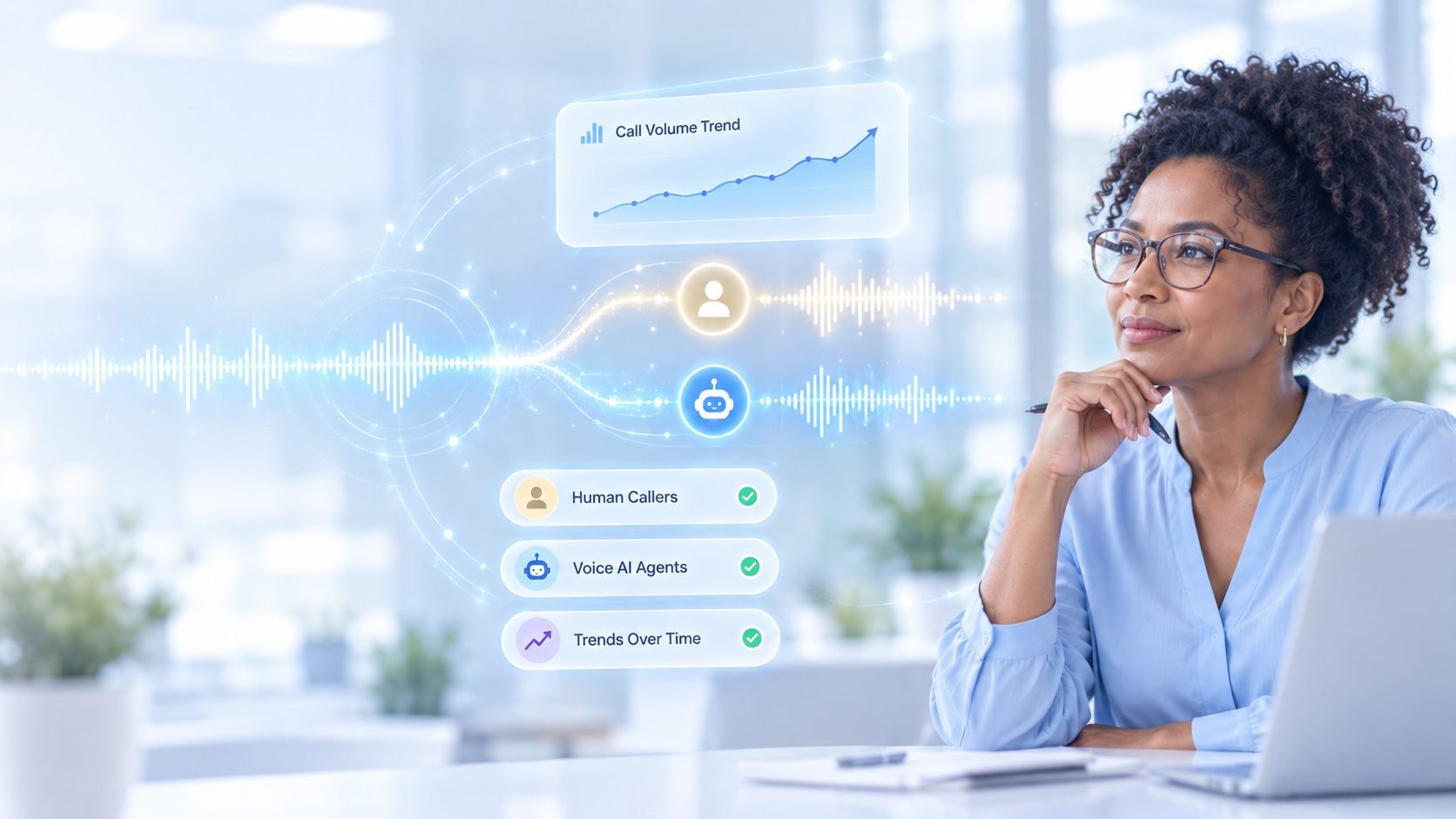
VoxEQ Insights analyze the calls your contact center has already recorded, alongside the performance data you already track. Using voice biometrics, VoxEQ Insights shed light on your call history to show who's calling and where there are patterns worth noting.
Real-time tools work during a live call. Insights works on the calls that already happened. Because it looks across weeks or months of history at once, it can show patterns that no single call would reveal.
Every finding follows the same path:
- Learn: what the recordings show, such as the share of calls from bots, which agent-caller pairings perform best, or where caller-profile mismatches cluster
- Answer: the operational question behind it, like why certain agents do better with certain callers
- Act: the change it points to, in routing, staffing, campaigns or fraud controls
Insights covers three types of analysis: Bot Detection, Agent-Caller Fit and Fraud Detection, each explained below. Your team gets the findings as a report, walked through live, with specific recommendations. You can run it once for a baseline, or monthly or quarterly to track how things change.
The callers who aren't callers at all
Here's a question that sounds simple and usually isn't: how many of yesterday's calls were made by a human?
A growing share of inbound traffic comes from machines. Some of it is legitimate: B2B bots and voice AI agents checking claim status, verifying benefits or confirming appointments for another business. Some of it is noise. Some of it is probing your systems. All of it lands in your volume reports, staffing models and handle-time averages as if a person had called.
Picture a provider support line that staffs up for a Monday-morning spike. The spike turns out to be largely automated eligibility checks, coming from a handful of numbers. The staffing plan got the volume right and got wrong who was calling.
Bot Detection Analysis flags calls with voice patterns consistent with automated or synthetic callers. It shows your real human share of volume and maps where automated traffic clusters by number, queue or campaign. Then you can decide deliberately how to handle that traffic: a dedicated path for known B2B bots, a different containment strategy, or a closer look at traffic that shouldn't be there at all.
The agent who just gets certain callers
Every contact center floor has one. Call her Denise. On paper her numbers are fine, middle of the pack. But listen to her calls with older callers and something changes. Calls get shorter, escalations drop, and people thank her by name. Put her in front of a rushed caller fixing a billing issue from a train platform, and she's average.
Her supervisor probably senses this. The routing engine has no idea. It sends Denise whoever is next in the queue, based on availability and maybe tenure.
Agent-Caller Fit Analysis turns that hunch into a ranked list. It groups callers into demographic-based segments. Line those segments up against outcome data you already track, such as CSAT, FCR, AHT and escalation rate, and patterns appear. You see which pairings consistently win, which consistently struggle, and whether a pairing wins on speed, satisfaction or resolution.
The action follows directly: route each caller to their best-fit agent and stop making the pairings that underperform. The same findings feed training (what is Denise doing that others could learn?), scheduling and specialization.
The voice that doesn't match the account
Fraud on the voice channel rarely announces itself, and a single call rarely gives it away.
Take an account that belongs to a 74-year-old woman. Over three months, a dozen calls come in from people claiming to be her. On several of them, the voice is consistent with a much younger male caller. Each call, on its own, got through the knowledge questions. Taken together, they form a pattern: caller-profile mismatches concentrated on one queue, mostly after 9 p.m.
Fraud Detection Analysis surfaces that kind of trend. It shows where mismatches concentrate by number, queue and time of day, and whether they're climbing. Your fraud team gets a map of where to tighten prevention and where real-time screening would do the most good. It also gets historical reporting to support compliance reviews and investigations.
Same tape, different game plans
The findings mean something different depending on which team is reading them. Each team starts with the same first question, people versus bots, before getting to which callers to match with which agents.
Marketing: know which campaigns reached people
What they learn: A new campaign number lights up and the dashboard calls it a win. Bot Detection Analysis shows how much of that response came from people and how much came from bots or voice AI agents. Demographic-based caller segments then show which groups of callers actually responded to each campaign.
What they do about it:
- Report campaign response on human calls only, so automated traffic doesn't inflate results
- Shift spend toward the campaigns and channels that brought in the segments you were targeting
- Hand sales and support a heads-up on which segments a campaign is likely to send their way
Sales: put high-intent callers in front of the right rep
What they learn: Inbound sales lines attract their share of automated traffic, from price checks to lead-gen bots, and every one of those calls counts against rep capacity. Once the real buyers are separated out, Agent-Caller Fit Analysis shows which reps consistently convert which caller segments.
What they do about it:
- Keep automated traffic off rep queues so reps spend their time on real prospects
- Route each segment to the reps with the strongest track record with it
- Coach the rest of the team on what top reps do differently with each segment
Support: staff for the callers you actually get
What they learn: Support teams staff to forecast volume. If part of that volume is automated, the forecast is wrong in a way no one can see. Bot Detection Analysis shows the real human share by queue and time, and Agent-Caller Fit Analysis shows which pairings win on CSAT, FCR, AHT and escalation rate.
What they do about it:
- Build staffing and scheduling on human volume, and give known B2B bots and voice AI agents their own path
- Update routing rules so callers reach the agents who resolve their issues best
- Use the strongest pairings to shape training and specialization
Fraud and risk: find the pattern behind the single call
What they learn: Fraud Detection Analysis shows where caller-profile mismatches cluster by number, queue and time of day, and whether they're growing. Bot Detection Analysis adds which of those calls showed voice patterns consistent with automated callers.
What they do about it:
- Tighten controls on the queues and hours where mismatches concentrate
- Prioritize where real-time screening goes first
- Use historical mismatch reporting to support compliance reviews and investigations
A snapshot or a time-lapse
A photo tells you what something looks like. A time-lapse tells you where it's heading.
VoxEQ Insights works both ways. Run it once and you get a baseline: your bot share, your strongest and weakest pairings, and where mismatches cluster today. Run it monthly or quarterly and you get the time-lapse:
- Did bot traffic grow after that new campaign launched?
- Did last quarter's routing change actually lift FCR for the segment it targeted?
- Is the after-hours fraud cluster shrinking, or has it moved to another queue?
A snapshot tells you what share of calls looked automated. A trend line tells you whether that share has doubled since spring. The decisions that matter usually come from the trend line.
What changes when you watch the tape
Most contact centers already have plenty of reports. The difference is what those reports are built on.
Your numbers start counting people. Once bots and voice AI agents are separated out, volume reports, staffing plans, campaign results and handle-time averages describe the callers you actually serve. Decisions that used to be made on inflated numbers get made on real ones.
Routing runs on evidence instead of availability. "Next agent free" and "most senior agent" are guesses about who will handle a call well. A ranked view of which pairings win on CSAT, FCR, AHT and escalation rate replaces the guess with a track record. The findings can also feed straight into live routing.
Fraud shows up as a pattern, not a surprise. A mismatch on one call is easy to miss. A cluster of them on one queue, after hours, over three months, gives your fraud team something to act on before the losses pile up.
Every team works from the same picture. Marketing, sales, support and fraud stop debating whose numbers are right, because they're all reading the same tape.
Every change gets a scorecard. With a monthly or quarterly read, a new routing rule, campaign or fraud control has a before and an after. You find out whether it worked instead of assuming it did.
Watch the tape
Good coaches don't guess about matchups. They watch the tape, learn what happened, answer why, and change the game plan. Your contact center already has the tape, and VoxEQ Insights watches it with you.