

What to know about the future of CX: contextual intelligence, agentic orchestration, and the trust and governance needed to make both work.
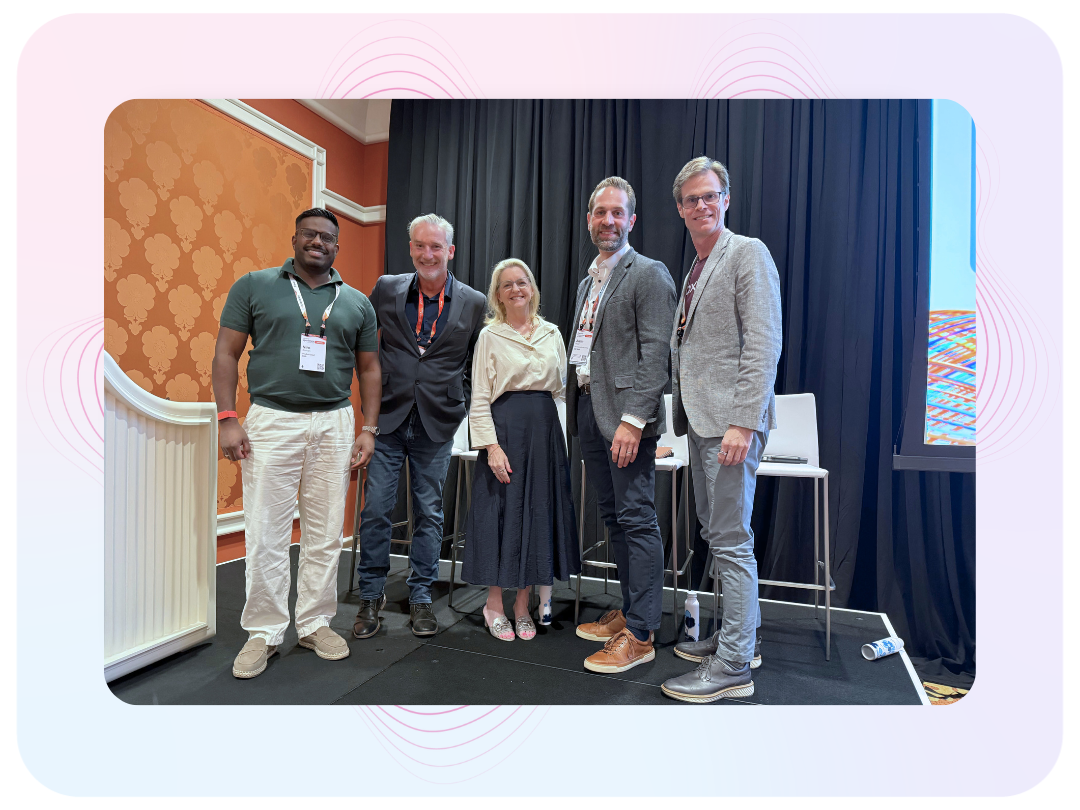
CEO Jack Caven spoke on a panel to discuss strategies leading banks can apply to deploy AI effectively.
92% of customers now expect every experience to match the best one they've ever had. That single stat, shared in one of the sessions at Genesys Xperience 2026, is a fair summary of the pressure behind everything else we heard in Vegas this year: contextual intelligence, agentic orchestration, and the trust and governance needed to make either one work.
VoxEQ caught up with partners and spoke with customers throughout the event, and we also shared the stage with banking leaders to discuss strategies on how regulated industries are deploying AI for the greatest impact. Here are our takeaways, and why that number kept coming back to mind.
Context Is Beating Automation as the Thing That Actually Matters
The opening keynote made the case that AI isn't valuable because it automates, it's valuable because of the outcomes it drives, and those outcomes keep coming back to context. The scale numbers were a reminder of how much runs through the Genesys platform already: 33 billion conversations a year, half of them voice, backed by more than a trillion API calls annually.
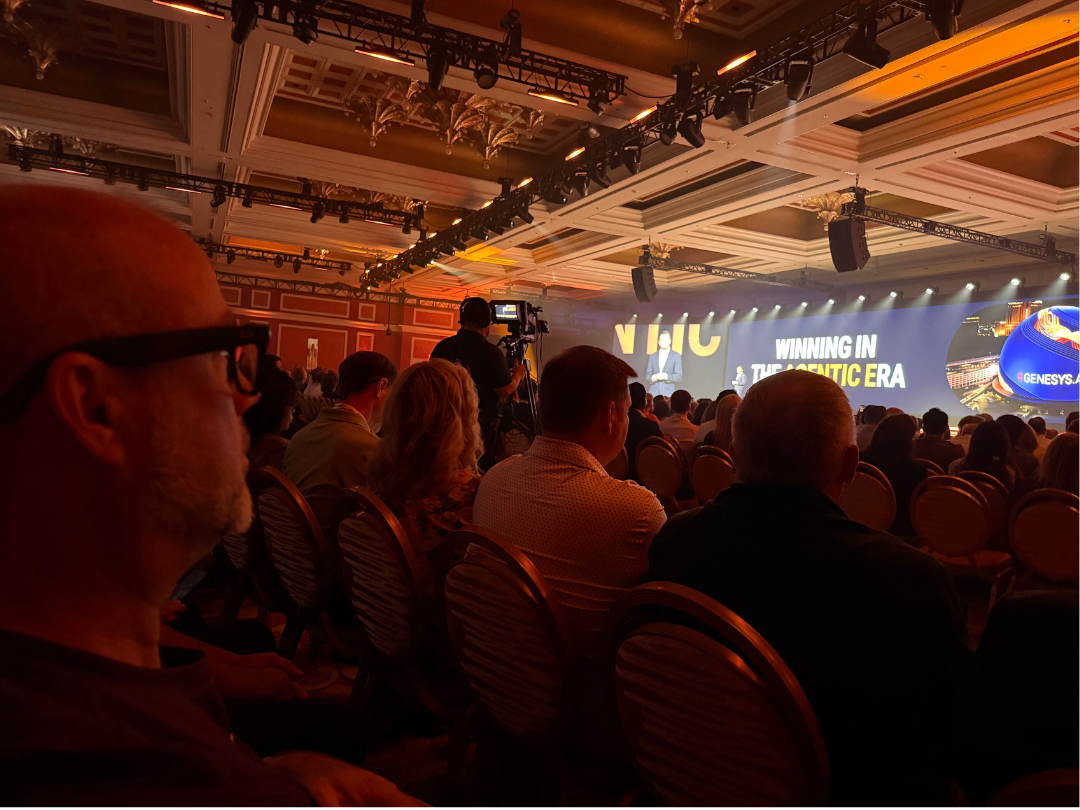
The more interesting thread, though, was trust, framed as "human currency" built on security, privacy, and governance, and only real when actions are observable and auditable. One line that stuck with us: governance isn't a brake on scale, it's the license to scale.
This lines up closely with our thesis at VoxEQ, which is built on caller context: an additional layer of insight that sits on top of the systems an enterprise support organization already runs, the IVR, the virtual agent platform, the CRM, the case and asset-management systems behind it.
Using voice intelligence, it helps that stack recognize when a caller is probably someone it has spoken with before in that account. Hearing Genesys frame contextual intelligence as the foundation for the next era of CX felt like validation of the direction we've been building in. We've written more about how caller context works for enterprise B2B support here.
Agentic AI Needs to Move From Answering Questions to Coordinating Journeys
Genesys CTO Glenn Nethercutt gave one of the more memorable talks of the event, using a navigation and seafaring metaphor to explain why closing that expectation gap takes a different architecture than most companies have today. Bounded systems like RAG plus conversational state are safe, but they answer rather than act, and they aren't journey-aware: a call session can close while the customer's actual journey keeps going. His fix is an orchestration "navigation stack": the AI agent is the vessel, holding the conversation and acting within guardrails; tools are the gear that extend its reach; a Large Action Model is the captain, bringing discipline to what the vessel does; and a new orchestration layer manages the broader voyage, coordinating human, workflow, and agent actors over the long haul.
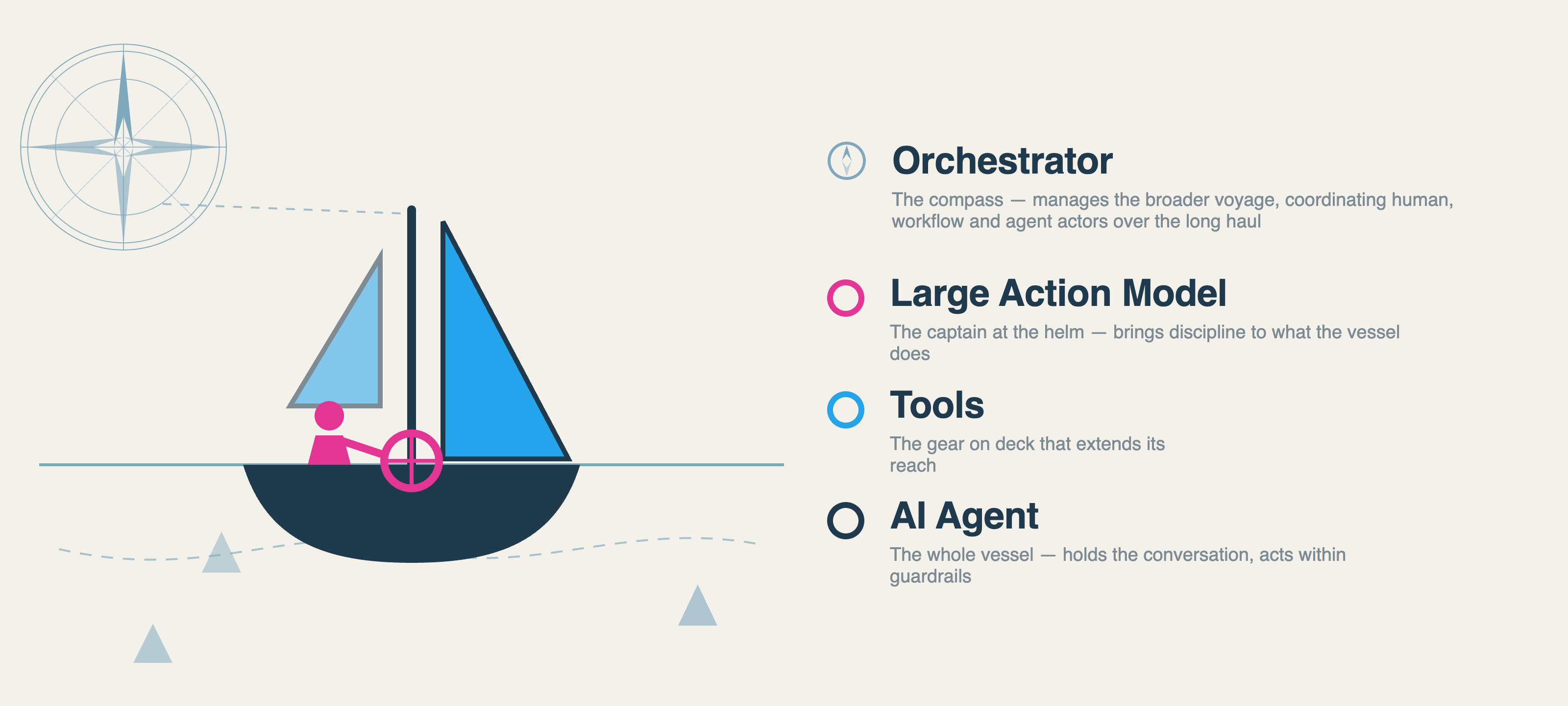
Governance sits underneath all of it, since you can't govern what you can't observe, so every decision gets logged like a ship's log. The line that summed it up: most companies today have navigation, very few have orchestration, and the winners will be the ones who coordinate the entire voyage, not just the next response.
Trust Isn't Binary: An Alternate Take on the AI Trust Paradox
On the panel we spoke on alongside banking leaders from M&T Bank, Global Payments, and DNB Bank, one question stood out:
Are customers really caught in an AI trust paradox, using it constantly in their own lives while trusting it less from their bank?
VoxEQ CEO Jack Caven proposed an alternate point of view. Trust isn't binary, he argued, it's contextual: people are comfortable letting AI summarize an email, but a decision that touches their account or their identity needs a different bar.
His framing was graduated permission over an AI-or-not switch: AI acts when stakes are low and confidence is high, asks when the situation is ambiguous, and hands off to a human when stakes are high or confidence is low. It's the same principle behind how VoxEQ approaches voice intelligence: the system's confidence in who it's actually talking to should shape how much autonomy it gets.
The same instinct carried into how banks prove AI is worth the investment. Jack's recommendation was to stop counting containment and handle time and start counting outcomes: did the customer accomplish something valuable, did the institution reduce risk or cost, would the customer choose that channel again.
"Containment without customer acceptance," he said, "is just a customer who hasn't escaped yet."
Framed that way, trust and value turn out to be the same problem: both depend on actually knowing something real about the person on the other end of the call, not just logging that the conversation ended.
Where This Leaves Us
Xperience 2026 made the case that the next phase of CX isn't smarter scripts or faster bots, it's systems that understand context, earn trust before acting on it, and can be governed because their decisions are observable.
That's the exact layer VoxEQ builds on the voice channel: real-time caller context, grounded in voice bio-signal analysis, that helps banks know who they're really talking to before deciding how much to trust the interaction.
We came home with plenty of validation for where we're headed, and a lot to build toward. Want to talk through any of it? Get in touch, we'd love to keep the conversation going.