

For decades, inbound calls have been handled with one size fits all scripts and routing.
We scaled automation and personalization on digital channels but kept one size fits all logic in the most human channel: the voice.
Even though many contact centers direct traffic to the web, 70 percent of consumers still prefer a human-in-the-loop experience, with only 16 percent favoring AI alone.
That means there’s an untapped opportunity to understand callers more deeply so that we can personalize interactions with each caller.
VoxEQ equips human and voice AI agents with real-time caller demographic insights, replacing a one-size-fits-all approach with tailored, demographic-based context on every call.

The Gap in Voice CX Today
Let’s take a look at how most contact centers handle inbound calls today.
When customers call in, they’re still too often routed by base-level methods: issue type, IVR logic, or simple language preferences. And callers, especially first-timers, don’t receive the tailored, personalized attention they expect. Instead, everyone gets the same script, same routing, same upsell pitch, no matter who’s on the line.
The result is transactional conversations. Customers don’t feel they’ve been met with the help they needed, and you’ve lost opportunities to connect, convert, and retain them. The end result is lower satisfaction, robotic conversation flows, and interactions that feel transactional instead of human.
Luckily, there’s a path to personalize experiences for each caller using voice bio-signals, which contain biological information encoded in a person’s voice that reveals demographic context. These voice bio-signals can be used to shape how a caller might best be engaged, supported, and understood.
What is Real-Time Caller Demographic Insights, and How Can It Help?
Think about every time a call is made into the contact center. When a customer calls, they speak into a telephony system to indicate what they need so that the IVR can effectively route their call.
Now, imagine that in the few seconds of a call (when a caller states their needs or gives their essential identifiable information like date of birth or account number), your contact center has insight into the caller’s demographics.
Maybe it’s a senior caller who needs additional patience and slower, step-by-step information given when they’re calling about their coverage plan. Alternatively, a millennial woman calling in about a beauty product order might want quicker information and would be a great fit for loyalty program enrollment.
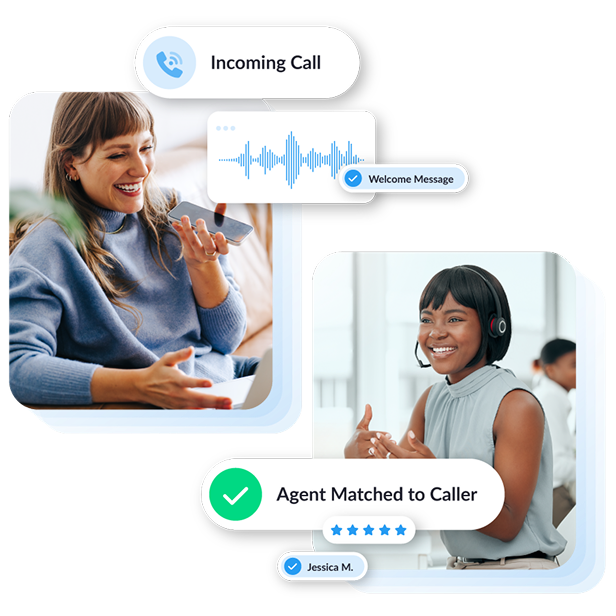
VoxEQ enables contact centers to match callers to the right agent, even without previous caller data.
By analyzing bio-signals produced by the human voice within moments of a call, demographic insights are automatically surfaced to inform routing, scripting, and interaction style, helping organizations respond with personalization on each call, even when the caller is new or not yet recognized in the CRM.
In turn, the inbound voice channel is turned into an engine for voice-led CX.
Who Is It For?
Real-time caller demographic insights work to improve how both human agents and voice AI agents meet customer needs.
For Human Agents
VoxEQ Persona equips live agents and routing systems with instant demographic context derived from the caller’s voice. This enables organizations to dynamically route callers to the best-fit agent or script, adapt greetings, adjust communication styles, and personalize offers as soon as the conversation begins. The result is faster rapport, higher trust, and more fluid interactions that feel personal rather than procedural.
Persona is especially powerful for inbound centers that handle large volumes of first-time or anonymous callers, giving agents and systems meaningful context before any data is exchanged.
For Voice AI Agents
VoxEQ Prompt extends this same insight on caller demographics to automated systems like AI agents and bots. Traditional voice AI agents often rely n fixed scripts and uniform tones. Prompt enables dynamic adaptation, guiding automated systems to refine phrasing, pacing, and responses based on each caller’s vocal bio-signals, and what these signals can indicate on ideal tone, offers, and dialogue flows.
The result is automated conversations between people and voice AI that feel natural, contextually relevant, and emotionally in tune.
What Are Real-Time Caller Demographic Insights Used For?
Contrary to popular belief, contact centers don’t need years of purchase history to deliver a more relevant customer experience. Demographic insights can help teams route calls more intelligently, personalize conversations, and improve how both human agents and AI assistants interact with customers.
Here are a few ways these insights can make support experiences smoother and more effective.
Call Routing and Segmentation
Contact centers can direct callers to agents who are trained to support specific groups, even when there’s no purchase history yet. For example, calls can be routed to agents familiar with the needs of retirees, young entrepreneurs, or college students looking for loan programs.
This kind of routing helps callers connect with someone who understands their context right away, making each conversation more effective right off the bat.
Demographic insights can also reveal caller group patterns, leading to better segmentation tactics. For example, contact centers may notice that members over 75 frequently call about prescription coverage questions, prompting them to train a dedicated agent group on pharmacy benefits, build out FAQ resources for that topic, and even redesign their plan documents to make drug coverage details clearer. That information can guide agent training, shape the knowledge base, and influence how offers or services are designed.
Caller Personalization
Personalization has a wide range of applications on the inbound voice channel, from how agents greet callers to which offers they extend during the conversation, and even which channels (like web or text) are optimal for referral when needed.
Adjusting Tone and Communication Style
Demographic insights can help agents adapt their tone, pacing, and level of detail.
Senior callers may appreciate a slower, step-by-step walkthrough with clear explanations, while younger ones may prefer quick answers and a more informal tone.
When agents adjust their approach to match what callers are comfortable with, conversations tend to move more smoothly. There is less confusion, fewer repeated explanations, and a better chance of solving the issue during the first call.
Prioritizing the Most Relevant Offers
Demographic insights can also help agents determine relevant offers to up-sell or cross-sell inbound callers.
Younger callers might be looking for student or early-career support. Heads of household may be interested in bundled family services. Senior customers may want help with retirement planning or simplified account management.
Instead of listing every possible option, agents can start with the most likely ones. That makes the conversation feel more focused and less overwhelming for the caller.
Guiding Customers to the Right Channel
Channel preferences often vary by age, as well. Older callers are typically more comfortable handling things by phone, while younger customers are often open to self-service tools or asynchronous options.
Knowing this allows agents to guide callers naturally. In some cases, it makes sense to stay on the phone and complete the task together. In others, sending a text with a link to finish the process online may be faster and more convenient.
Making AI Voice Agents Smarter
When a caller first connects with a voice AI system, there may be little to no behavioral data available yet, meaning dialogue flows are one-size-fits-all. Basic demographic insights can inform more contextual prompt engineering to improve tone and pacing from the very beginning.
Those first few seconds of interaction matter a lot. When the conversation feels natural and comfortable right away, callers are more likely to stay engaged and complete the interaction.
Demographic context can also help AI decide when it should escalate to a human agent, improving the overall flow of the conversation.
Enriching AI Engines
Demographic insights can be fed directly into conversational AI systems as structured data in real-time.
Within seconds, customer signals can be passed into the AI layer using standard protocols. That context allows AI agents to adapt instantly during the interaction, creating conversations that feel more relevant and more helpful from the very start.
The result is a support experience that feels smoother for customers and more effective for the teams serving them.
Post-Call Analytics
Real-time caller demographics add to a gold mine that many contact centers are already sitting on, often without fully leveraging it. Each interaction contains valuable signals around customer needs, pain points, and preferences. When combined with real-time caller demographics, organizations gain a clearer view of who is calling, not just why, adding important context to each interaction. Together, these insights help brands refine segmentation with personalized, end-to-end customer journeys, enabling a brand continuum in what was previously a CX blind spot.
Industry Applications: Where Impact Lies
| Industry | Key Benefits | CX Gains |
| Retail / E-Commerce | Personalize up-sells and post-purchase care based on caller demographics. | Higher cart value, increased conversion, reduced churn |
| Financial Services | Route callers to agents trained in relevant life-stage needs in investment, savings accounts and wealth management. | Boost trust, drive retention, improve cross-sell/up-sell |
| Insurance | Match callers with trained agents and tailor script flow during claims and policy update calls. | Higher CSAT during sensitive conversations, better policyholder experience |
| Healthcare | Route patients to communication-compatible agents and personalize conversations around age or vocal tone. | Improved patient satisfaction, clearer communication, stronger emotional trust |
Seamless Integration
Both VoxEQ Persona and Prompt integrate seamlessly with your existing call systems and IVRs—no rip-and-replace required. You get real-time demographic insights within seconds of a call starting, empowering human and AI agents with immediate context.
Built with privacy at its core, VoxEQ operates without storing personally identifiable information (PII), ensuring a secure, compliant experience.
Whether you’re managing an in-house team, a BPO partner, or a hybrid support model, VoxEQ is designed to scale effortlessly across your operations.
What’s Next for the Voice Channel
At the end of the day, even a small amount of context for otherwise anonymous, inbound callers can make a big difference in how a conversation unfolds.
When agents and AI systems have a better sense of who they’re speaking with, they can guide the call in a way that feels more natural, relevant, and helpful. Instead of asking customers to sort through options that don’t apply to them, support teams can focus on what’s most likely to matter.
It’s a reminder that your inbound voice channel doesn’t have to follow a one-size-fits-all model anymore.
With the right context, every interaction can feel a little more personal, efficient, and tailored to the person on the other end of the line.